Source Welding Turntable for Pipe, Tank, and Frame Fabrication
Compare 28 welding turntable units with varying load capacities, rotation speeds, and tilting angles. Buyers can evaluate models like HBT5 and BY-100b for specific industrial welding applications. These machines feature adjustable speeds and high load ratings suitable for diverse fabrication needs.
Key considerations
Products List

500kg Welding Rotary Table Welding Turntable
$1000.00 - $10000.00
Moq: 1
Wuxi Datang Welding & Cutting Mechanical Equipment Co., Ltd.


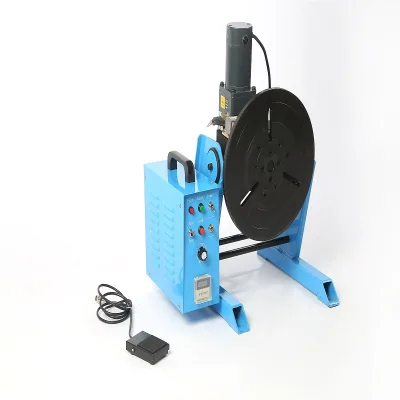
CE Certified Pipe Welding Turntable with Clamping Fixtures (0-360° Rotation)
$10000.00 - $40000.00
Moq: 1

Comprehensive Sourcing Guide
Welding Turntable Sourcing Guide
Procuring a welding turntable requires careful alignment between your specific fabrication needs and the technical capabilities of available machinery. These devices are essential for rotating workpieces to maintain optimal welding positions, thereby improving weld quality and operator efficiency. Buyers must evaluate whether a fixed platform or an adjustable system best suits their production volume and part geometry. Understanding the core mechanical constraints is the first step in selecting equipment that integrates seamlessly into existing workflows without requiring extensive facility modifications.
The market offers a diverse range of configurations, from traditional special tilters to flexible combination systems. Observing the available listings reveals significant variation in load capacity, rotation speed, and tilting angles. For instance, some models support up to 500 kg with a tilting range of 0-90°, while others offer extended eccentricity distances up to 200 mm. This diversity means that a one-size-fits-all approach is ineffective. Buyers must rigorously match their heaviest and most complex components against the machine’s rated center of gravity and maximum load weight to prevent operational failures or safety hazards during high-speed rotation.
Product Scope and Observed Listing Signals
The current market landscape for welding turntables includes a wide array of models, such as the HBT, HBZ, and BY series, each catering to different industrial demands. Listings indicate that customization is widely available, allowing buyers to tailor specifications to unique project requirements. Voltage options typically include 110V/220V compatibility, ensuring adaptability to various regional power standards. The observed price range spans from $100 to $100,000, reflecting the disparity between small benchtop units and heavy-duty industrial platforms. This broad spectrum necessitates a clear definition of budget and performance expectations before engaging with suppliers.
Minimum order quantities (MOQ) generally range from 1 to 5 units, suggesting that single-unit purchases are feasible for most buyers. Packaging methods vary, with options including wooden cases, wooden boxes, steel frames, and free fumigation wooden cases, which impacts shipping costs and handling procedures. Origin locations are primarily reported as Jiangsu, China, and Jinan, Shandong, indicating a concentration of manufacturing hubs in these regions. Buyers should verify the specific origin of their chosen model, as regional manufacturing standards and logistics networks can influence lead times and after-sales support availability.
Technical Specifications to Verify
Rotation speed is a critical parameter that directly affects welding consistency and productivity. Observed specifications show ranges such as 0.1-1 rpm for larger platforms and 0.5-3.5 rpm for smaller units like the BY-10. Buyers must ensure that the selected speed range matches the thermal requirements of their welding process, as slower speeds may be necessary for heat-sensitive materials. Additionally, torque ratings, such as 80 Nm, indicate the machine’s ability to maintain position under load. Verifying these dynamic characteristics ensures that the turntable will not stall or slip when handling heavy or unbalanced workpieces during the welding cycle.
Tilting angle capabilities further define the versatility of the equipment. Models are observed with tilting ranges of 0-90° or 0-120°, allowing for complex multi-position welding without manual repositioning. The maximum eccentricity distance, noted as 100 mm or 200 mm, determines how far off-center a load can be placed safely. Buyers should calculate the center of gravity of their typical workpieces to ensure it falls within these limits. Furthermore, table dimensions, such as 800 mm or 345 mm, must accommodate the physical footprint of the parts being welded, ensuring adequate workspace and stability during operation.
Compliance and Safety Documentation
Safety certifications are paramount when operating rotating machinery in industrial environments. While some listings reference CE standards, buyers must independently verify the validity and scope of these certifications for their specific region. Compliance with local electrical safety regulations is essential, particularly given the variation in voltage inputs like AC110V/220V 50/60Hz. Buyers should request detailed electrical schematics and safety interlock documentation to ensure the equipment meets all mandatory occupational health and safety requirements. This due diligence prevents legal liabilities and ensures a safe working environment for operators.
Documentation regarding the machine’s structural integrity and load testing should also be scrutinized. Although specific test results are not always provided in listings, buyers should inquire about factory acceptance tests and load certification reports. Understanding the standard used, such as Hb Standard Welding Positioner or generic Standard classifications, helps in assessing the quality baseline. Buyers must ensure that the supplier provides comprehensive operation manuals that include emergency stop procedures, maintenance schedules, and troubleshooting guides, which are crucial for long-term safe operation and regulatory compliance audits.
Cost Drivers and Commercial Terms
The total cost of ownership extends beyond the initial purchase price, encompassing shipping, installation, and potential customization fees. The wide price range observed, from $100 to $100,000, is driven by factors such as load capacity, motor power, and structural complexity. For example, models with higher power inputs like 0.18 Kw or specialized features like adjustable welding turning rolls command higher prices. Buyers should request detailed quotations that break down these costs to understand the value proposition of each feature. Negotiating packaging options, such as steel frames versus wooden cases, can also significantly impact logistics expenses.
Commercial terms regarding payment and delivery are critical for cash flow management and project planning. While specific lead times are not uniformly disclosed, buyers should negotiate clear delivery schedules and penalty clauses for delays. The availability of customization suggests that lead times may vary based on the complexity of the requested modifications. Buyers should also clarify warranty terms, including coverage for motors and control systems, and the availability of spare parts. Understanding these commercial nuances helps in mitigating financial risks and ensuring that the procurement process aligns with broader supply chain strategies.
Supplier Qualification and Quality Control
Evaluating supplier credibility is essential to ensure the reliability of the welding turntable. Buyers should verify the manufacturer’s production capabilities, including factory audits and quality management system certifications. Given that origins are primarily in Jiangsu and Shandong, buyers may consider visiting these facilities or hiring third-party inspection services to assess manufacturing standards. Suppliers with a history of exporting to your region may offer better support and compliance with international standards. Building a relationship with a qualified supplier reduces the risk of receiving substandard equipment that fails to meet operational requirements.
Quality control processes should be explicitly defined in the purchase agreement. Buyers should specify acceptance criteria, including dimensional tolerances, electrical performance tests, and load-bearing capacity verification. Requesting pre-shipment inspection reports or video evidence of testing can provide additional assurance. Clear communication regarding customization requirements is vital to avoid misunderstandings that could lead to non-conforming products. Establishing a robust quality control framework ensures that the delivered equipment meets the specified technical parameters and performs reliably in the intended industrial application.
Long-Term Procurement Checks
Sustainability and lifecycle management are increasingly important considerations in industrial equipment procurement. Buyers should assess the energy efficiency of the turntable’s motor and control systems to minimize operational costs over time. Models with variable speed controls and efficient power inputs contribute to lower energy consumption. Additionally, the availability of replacement parts and technical support should be evaluated to ensure long-term maintainability. Suppliers that offer comprehensive training and ongoing technical assistance add significant value by extending the equipment’s useful life and reducing downtime.
Future scalability is another key factor in long-term procurement planning. Buyers should consider whether the selected turntable can accommodate future production increases or changes in product design. Modular designs or customizable features may offer greater flexibility as business needs evolve. Regular maintenance schedules and performance monitoring should be integrated into the procurement strategy to prevent unexpected failures. By focusing on long-term value rather than just initial cost, buyers can secure equipment that supports sustained operational efficiency and adapts to changing industrial demands.
FAQs
What is the maximum load weight for the HBT5 welding turntable?
The HBT5 welding turntable supports a maximum load weight of 500 Kg. This capacity is suitable for medium-sized fabrication tasks. The platform structure ensures stability during rotation. Users should verify that the center of gravity remains within the rated 100mm limit to prevent tipping. This model operates at a rotation speed of 0.10-1.00 Rpm for precise positioning.
Can the welding turntable handle eccentric loads up to 200mm?
Yes, specific models support a maximum eccentricity distance of 200mm. This feature allows for off-center workpieces without compromising stability. The tilting angle ranges from 0-120° or 0-90° depending on the variant. Operators must ensure the load weight does not exceed the rated capacity. This capability is essential for complex welding positions requiring precise angular adjustments.
What voltage options are available for the welding positioner?
The welding positioner is available with 110V/220V voltage options. Some models specifically support 220V input. Power consumption varies, with some units using 0.18 Kw or 120W motors. The power input can also be AC110V/220V at 50/60Hz. This flexibility allows integration into various industrial power systems. Always match the unit voltage to your facility's supply.
Which certifications are provided for the welding turntable models?
Certain models, such as the BY-100b, are certified with CE standards. Other units may follow Hb Standard Welding Positioner guidelines or general standard specifications. These certifications indicate compliance with safety and quality benchmarks. Buyers should verify the specific standard for their required model. Certification ensures the equipment meets international operational requirements for industrial welding environments.
How is the welding turntable packaged for shipping?
Packaging options include wooden cases, wooden boxes, and steel frames. Some units are shipped in free fumigation wooden cases for international compliance. Other models may have packaging determined after negotiation. The over-dimension for smaller units is approximately 500*470*415mm. Proper packaging protects the platform structure and rotating components during transit from Jiangsu or Jinan.
What is the rotation speed range for the welding turntable?
The rotation speed typically ranges from 0.1-1rpm for standard models. Some variants offer speeds between 0.5-3.5rpm or specific settings like 1.7/2.15rpm. This adjustable speed allows for precise control during welding operations. The motor power, such as 120W or 0.18 Kw, drives this rotation. Operators can select the optimal speed based on the welding material and joint requirements.